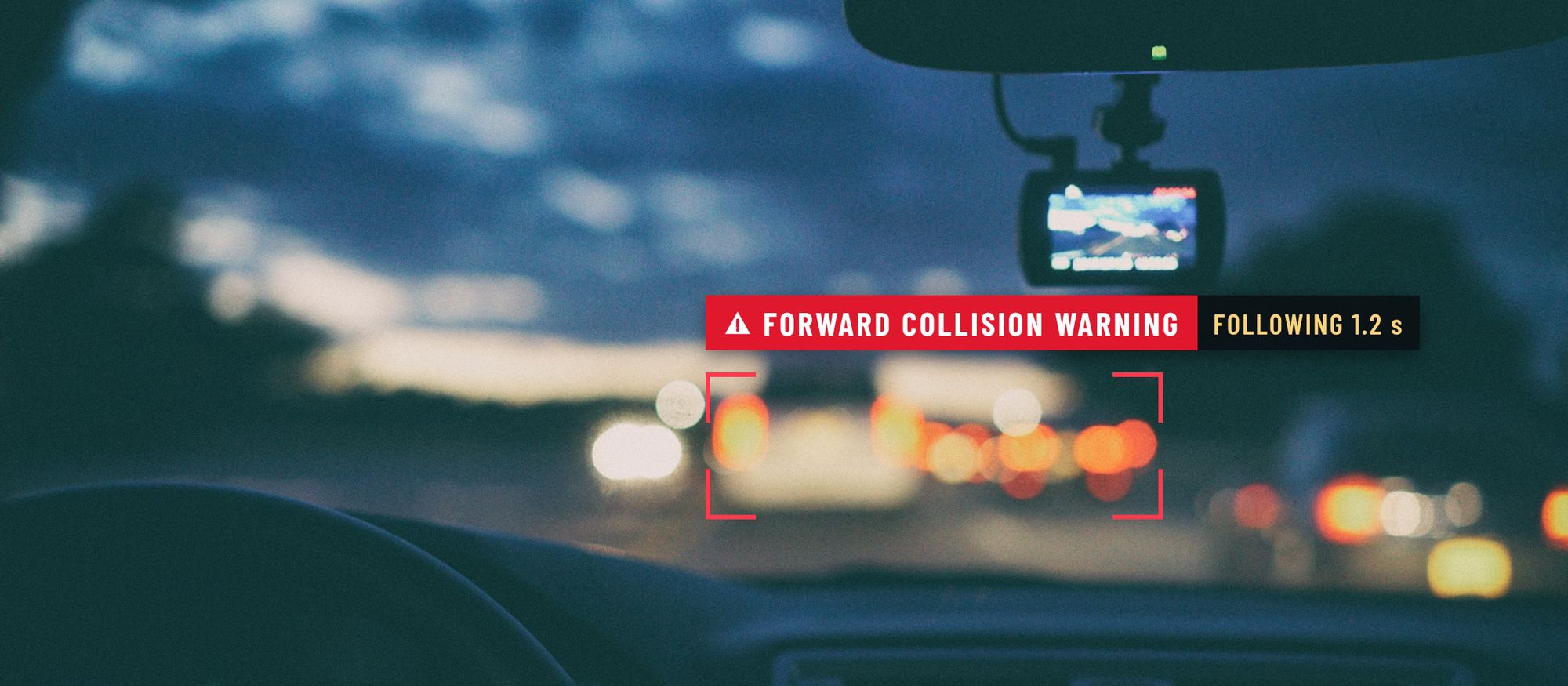
The short version: cameras can clear you after a crash and cut risky driving, but only when fleets use the video to coach, not just to blame. The privacy fight is almost entirely about the lens pointed at you, and the rules your fleet writes matter more than the camera brand.
What is in the cab now
- Road-facing camera. A dash cam that records the road ahead. Most drivers accept these; 44% of owner-operators already run one. (OOIDA Foundation, 2024)
- Driver-facing camera. A second lens aimed at you. It shows whether you were watching the road, holding a phone or belted in. This is the one drivers object to.
- AI alerts. Software that flags phone use, eyes off the road, drowsiness, no seat belt or following too close, then beeps and saves a clip.
Most systems record over themselves in a loop and save a short clip, about 30 seconds before and 60 seconds after, when something triggers it: hard braking, a swerve, a crash, an AI alert or a manager’s request. (VTTI, 2015)
The case for and against
For drivers
- Proof when it is not your faultLegal and insurance experts surveyed by ATRI said driver-facing footage cleared drivers in 52% of insurance claims and 49% of lawsuits. (ATRI, 2023)
- Fewer close calls, with coachingTwo fleets cut risky driving events by 37% and 52% once video came with coaching. (VTTI for FMCSA, 2009)
- Catches phone use and drowsinessTexting behind the wheel of a truck raised the odds of a safety-critical event 23 times. Alerts can stop it before a crash. (VTTI for FMCSA, 2009)
- Credit for driving wellGood programs praise safe driving too, not just mistakes. (VTTI, 2015)
Against
- The cab is your workspaceDrivers who use driver-facing cameras rate them 2.24 out of 10, against 8.19 for road-facing cameras. (ATRI, 2023)
- Clips used to blameThe top driver request was that footage be viewed only after a crash (18.8%). (ATRI, 2023)
- It never seems to turn off16.7% asked that the camera shut off when the truck is not moving, and 13.7% wanted control over it. (ATRI, 2023)
- Your face is dataAI that reads your face can collect biometric data. An Illinois class action over it settled for $4.25 million in 2025. (S.D. Ill., 2025)
The gap closes when the rules are fair: drivers’ approval of driver-facing cameras rises 87% when footage is used for specific safety coaching instead of fault-finding. (ATRI, 2023) Some drivers will not accept an inward lens under any policy, and that is a fair position. Teamsters at UPS and ABF Freight bargained driver-facing cameras out of their contracts. (IBT–UPS, 2023; Teamsters, 2023)
Privacy on the job: what is different for vocational crews
- Breaks happen in the cab.Lunch, paperwork and waits at the plant or job site happen in the seat. Ask whether the camera records while you are parked with the engine running.
- Your crew is on camera too.Helpers, crew members and trainees show up on inside video. Everyone in the cab should be told.
- Take-home trucks blur the clock.Ask what the camera and GPS record when you drive home or park in your driveway, and who can see it.
- Public trucks can mean public footage.Video from city, county and state trucks can be released under open-records laws, though exemptions often apply. (Tex. Gov’t Code 552.002; RCFP, 2015)
- Owner-operators set their own rules.Until you lease on. A carrier may require its own camera, so read the lease before you sign.
Your fleet holds the switch
Samsara, Motive and Lytx, three of the leading camera systems, all offer a privacy mode that stops inside recording while safety alerts keep working, and all three list lens covers. But on all three, the fleet turns those features on, not the driver. (Samsara, Motive and Lytx privacy pages) See the side-by-side comparison in our fleet guide to dash cam privacy, and share it with your safety manager.
Know your rights
- No federal requirement. No federal rule requires driver-facing cameras in trucks. In 2024, FMCSA dropped an inward camera requirement from its pilot program for drivers under 21. (Federal Register, 2024)
- No pushing you past your hours. 49 CFR 390.36 bars carriers from using logging data to pressure drivers into breaking hours-of-service or fatigue rules. You can report it to FMCSA. (49 CFR 390.36; FMCSA)
- Your face, your consent. Illinois requires written consent before a company collects face data, and Texas and Washington have biometric laws too. (Illinois Public Act 103-0769; Tex. Bus. & Com. Code 503.001; RCW 19.375)
- Union contracts can ban them. The UPS and ABF Freight Teamsters contracts prohibit inward-facing cameras. (IBT–UPS, 2023; Teamsters, 2023)
This article is general information, not legal advice. Rules vary by state and employer.
Driver FAQ
Do driver-facing cameras record all the time?
Most record over themselves in a loop and save a short clip, about 30 seconds before and 60 seconds after, when something triggers it: hard braking, a swerve, a crash, an AI alert or a manager’s request. Managers can often pull other stored video too, so ask how your fleet uses that.
Who can watch my in-cab camera footage?
Whoever your company policy allows. Good policies limit it to safety managers and coaches and log every view. After a crash, insurers and lawyers can get it too.
Does the camera record when I am parked, on break or off duty?
It depends on how your fleet sets it up. Samsara, Motive and Lytx all offer a privacy mode that stops inside recording while safety alerts keep working, and all three list lens covers, but the fleet decides. Ask for the off-duty rule in writing.
Do in-cab cameras record audio?
Some can. Samsara ships with in-cab audio off, while Motive and Lytx let fleets turn sound recording on. Union contracts can ban it: the UPS–Teamsters contract says no in-cab audio recording.
Does the camera scan my face?
Some AI systems analyze your face to spot phone use or drowsiness, or to identify the driver. Illinois requires written notice and consent first, and Texas and Washington have biometric laws too. Face ID from Samsara, Motive and Lytx requires consent, and Motive and Lytx do not offer it in Illinois.
Can I be disciplined or fired over a camera or AI alert?
It depends on company policy, your state and any union contract, and most U.S. jobs are at-will. A fair policy has a person review the clip before any action. This is general information, not legal advice.
Can I cover or unplug the driver-facing camera?
Not on your own. It usually breaks company policy, and it can leave you without proof if someone else causes a crash. Ask whether your fleet uses privacy mode or an approved lens cover for off-duty time.
Will a dash cam help me if a crash is not my fault?
Often, yes. Legal and insurance experts surveyed by ATRI said driver-facing footage cleared drivers in 52% of insurance claims and 49% of lawsuits, and road-facing video shows what the other vehicle did.
Can my employer put a driver-facing camera in my truck? Is it required by law?
No federal rule requires one, but in most cases an employer can require a camera as a condition of the job unless a union contract says otherwise. Ask for the camera policy in writing.
Got a camera story?
Did footage clear you after a crash, or did a bad policy push you out of a job? Join the Crew free and tell us. We may follow up for a future story.
Sources (31)
- OOIDA Foundation, Owner-Operator Member Profile Survey, 2024
- VTTI / NSTSCE, Effective Use of Onboard Safety Monitoring Technologies, 2015 (hosted by FMCSA)
- ATRI, Issues and Opportunities with Driver-Facing Cameras, April 12, 2023
- Truckers News, ATRI driver-facing camera survey results, 2023
- Transport Topics, ATRI findings on footage in claims and lawsuits, 2023
- CCJ, ATRI privacy ratings for driver-facing cameras, 2023
- FleetOwner, ATRI strategies to improve camera approval, 2023
- VTTI (Hickman, Hanowski, Ajayi), evaluation of an onboard safety monitoring system, Driving Assessment 2009, FMCSA-funded
- VTTI for FMCSA, Driver Distraction in Commercial Vehicle Operations, 2009
- Lewis v. Maverick Transportation LLC and Lytx, Inc., No. 3:22-cv-00046 (S.D. Ill.), final approval order, July 25, 2025
- IBT–UPS National Master Agreement, 2023–2028, Article 6
- Teamsters, Teamster leaders endorse tentative ABF agreement, June 2023
- Texas Government Code §552.002, Public information (includes video)
- Reporters Committee for Freedom of the Press, Washington Supreme Court grants access to dash-cam video (KOMO v. Seattle), 2015
- Samsara Help Center, Privacy Mode camera recording, 2026
- Samsara, Driver-facing lens cover
- Motive Help Center, Driver Privacy Mode (AI On), 2026
- Motive Help Center, AI Dashcam Plus lens covers, 2026
- Lytx, Risk ID Without Recording
- Lytx, SF400 event recorder spec sheet (privacy cover, audio, uploads)
- Federal Register, Safe Driver Apprenticeship Pilot Program changes, 89 FR 42055, May 14, 2024
- 49 CFR 390.36, Harassment of drivers (Cornell LII)
- FMCSA, Where should a driver file a harassment complaint?
- Illinois Public Act 103-0769 (BIPA amendment), effective Aug. 2, 2024
- Texas Business & Commerce Code §503.001, Capture or use of biometric identifier
- Washington RCW 19.375, Biometric identifiers
- Samsara Help Center, Dash cam settings for video, audio and Camera ID, 2026
- Motive Help Center, Enable in-cab audio recording, 2026
- Motive Help Center, Face Match, 2026
- Lytx, Facial ID and consent management
- Samsara Help Center, Camera ID driver consent
Figures were checked against each source on Oct 14, 2026. No camera or telematics company paid for or reviewed this article. Samsara, Motive and Lytx details come from their public product, help-center and policy pages. See something out of date? Send a correction.