Fleet dash cam privacy:a fair camera policy, plus Samsara, Motive & Lytx compared
Driver-facing cameras work best when drivers trust them. Here is the evidence on both sides, a policy checklist built for vocational crews, and the privacy controls the leading camera systems already offer.
By VTA Editorial9 min read
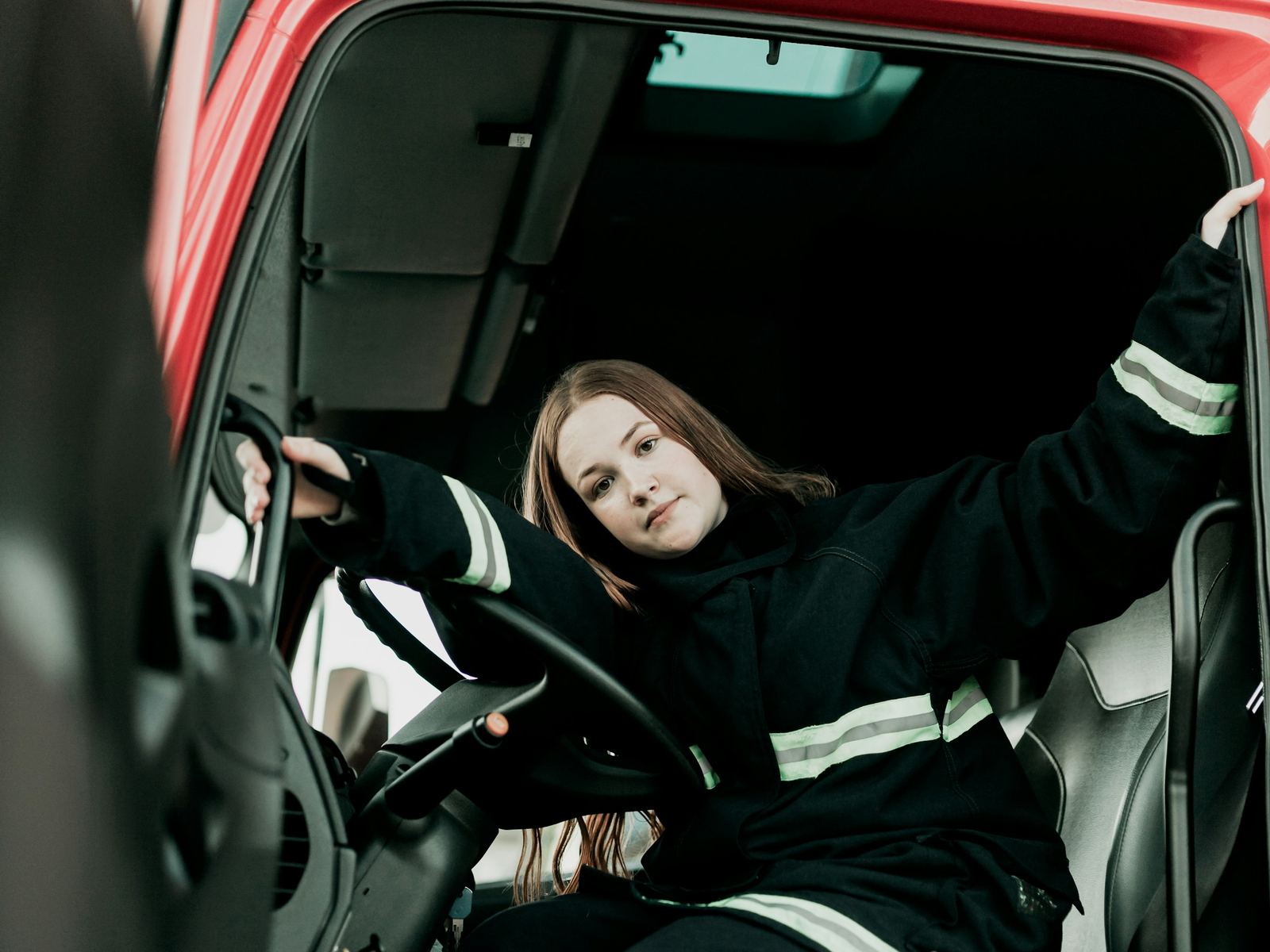
Driver trust decides whether a camera program works. Photo: Alexander Mass / Unsplash
A camera is not a safety program. In the FMCSA-funded study that made video coaching mainstream, an in-cab warning light alone, or coaching without video, was not enough; the drop in risky driving came when the two were combined. (VTTI for FMCSA, 2009; VTTI, 2015) Researchers also found many drivers dislike systems they believe are used solely to blame them. (VTTI, 2015)
That is the policy problem in one line. For the driver side of the story, share our driver guide to in-cab cameras with your crews.
Benefits vs. privacy:the numbers
The safety case
37–52%fewer safety events at two fleets once video came with coaching (VTTI for FMCSA, 2009)
23.2×higher odds of a safety-critical event when a truck driver texts (VTTI for FMCSA, 2009)
52% / 49%of insurance claims / lawsuits where experts said footage cleared the driver (ATRI, 2023)
Up to 293deaths a year that video monitoring on every large truck could prevent (estimate) (AAA Foundation, 2017)
3,208people killed in U.S. crashes involving a distracted driver in 2024 (NHTSA, 2026)
The safety benefit is real, but it comes from coaching, not from the camera alone. The privacy cost falls almost entirely on the driver-facing lens; road-facing cameras are close to a settled question.
Drivers’ approval of driver-facing cameras rises 87% when footage is used for specific, proactive safety steps instead of fault-finding. (ATRI, 2023) Some drivers will not accept an inward lens under any policy, and unions have bargained them out entirely, so expect pushback and plan for it.
What the data can’t tell you: police crash reports likely undercount distraction and fatigue. Federal fatal-crash data codes a distraction factor for about 5% of large-truck drivers (2020) (FMCSA, 2020 data), while investigators in the detailed Large Truck Crash Causation Study coded 13% of truck drivers in injury and fatal crashes as fatigued (2001–2003). (LTCCS, 2006) There is no reliable data yet on how many drivers quit over camera policies. In June 2026, ATRI asked carriers to submit before-and-after safety data on driver-facing cameras. (Trucking Dive, 2026)
What a faircamera policy looks like
ATRI’s experts and drivers, VTTI researchers and privacy groups land on much the same list. The last three items are specific to vocational fleets. (ATRI, 2023; VTTI, 2015; FPF and Samsara, 2022)
Record events, not the whole shift. Save clips on triggers instead of streaming continuous video.
Go dark off duty. Privacy mode when parked or off duty, and a lens cover for breaks and sleeper time.
Limit who watches. Safety managers and coaches only, with an audit log of every view.
Put it in writing. A short policy at hire: what is recorded, who sees it, how long it is kept and how it is used.
Coach first. Review the clip with the driver, talk through it, and praise good driving too.
A person reviews every alert before any discipline. No action based on an AI score alone.
Tune the triggers. Cut false alerts so the real ones still mean something.
Get consent for face data. Written notice and consent before any biometric feature is switched on.
Let drivers see their clips. Show drivers their own events, and let them flag footage that clears them.
Tell the whole crew. Helpers, crew members and trainees in the cab are recorded too, so they need notice as well.
Set take-home rules. Say what the camera and GPS record when a truck goes home at night, and who can see it.
Plan for records requests. City, county and state fleets should decide how they will handle open-records requests for video.
Samsara, Motive & Lytx:the privacy controls you already have
Industry analysts at Berg Insight and ABI Research rank Lytx, Samsara and Motive among the leading video telematics providers, and all three sell to construction, waste, utility and public-sector fleets. (Berg Insight, 2025; ABI Research, 2026) Their public pages show that most items on the checklist above already exist as settings. On all three, the fleet turns them on, not the driver. (Samsara, Motive and Lytx, 2026)
Driver privacy controls in Samsara, Motive and Lytx dash cams
Control
Samsara
Motive
Lytx
Driver privacy mode
Driver Privacy Mode turns off inward-facing recording while AI event detection keeps working.
Driver Privacy Mode (AI On) turns off driver-facing video and audio while AI detection keeps working.
Risk ID Without Recording keeps AI alerts on without storing in-cab video.
Out of the box
Full recording on all cameras until the fleet changes it.
Driver-facing camera set to Always On. Fleets can switch it off when idling, when the engine is off, or always.
Not publicly documented. Lytx says fleets configure it rather than relying on one default.
Physical lens cover
A bright blue driver-facing lens cover, sold for off-duty use.
Removable covers that block one or both lenses on the AI Dashcam Plus.
An optional Driver Privacy Cover for the inside lens is listed for the SF400 camera.
In-cab audio
Off by default.
Admins can turn it on. Once on, it records continuously and is attached to critical events and recalled videos.
Built-in microphone. Fleets choose when sound is recorded. Default not publicly documented.
What goes to the cloud
Mainly safety events and manual requests. The camera records over itself in a loop.
Only safety events and recalled videos. The camera keeps footage for up to 30 hours or 7 days, depending on the model.
Event clips upload daily, and managers can pull video on demand. Cloud retention not publicly documented.
Face recognition
Camera ID is off by default. The employer must get driver consent. Data is deleted within 90 days after a driver is deactivated.
Face Match requires the employer to get consent. Motive says it does not store biometric data. Not offered in Illinois.
Facial ID turns on only after every driver in the group consents by text or email. Not offered in Illinois.
Drivers see their own events
Driver Event Review in the Samsara Driver App.
Driver Self-Coaching: drivers watch and mark their events.
The Lytx Driver App shows drivers their own event video, with self-coaching for lower-risk events.
Settings as described on each company’s public product, help-center and policy pages as of October 2026. “Not publicly documented” means the company does not publish it outside its customer login. Features vary by camera model and plan.
Read vendor safety numbers carefully
All three companies publish results from their own customer data. Samsara reports about 75% fewer crashes for fleets using its full AI safety package for 30 months. Motive reports an average 80% drop in collisions for customers with high adoption. Lytx estimates its clients saved $1.9 billion on claims in 2025, based on a sample of client data. None of these comes from an independent study, so treat them as company claims. (Samsara, 2025; Motive, 2026; Lytx, 2026)
Brand-versus-brand claims deserve even more caution. In 2026, an arbitrator ruled that Motive’s claims of outperforming Samsara were literally false, and Motive said it stopped using those studies. Separately, the U.S. International Trade Commission found Motive did not infringe Samsara’s patents. (Transport Topics, 2026; Fleet Maintenance, 2026) Judge a system by its privacy settings and how well your drivers accept it, not by marketing numbers.
Legaland liability checklist
No federal mandate. No federal rule requires driver-facing cameras. The NTSB recommended video event recorders for all heavy commercial vehicles in 2010, but no rule followed, and in 2024 FMCSA dropped an inward camera requirement from its under-21 driver pilot. (NTSB, 2010; Federal Register, 2024)
No harassment through logging data. 49 CFR 390.36 bars carriers from using ELD data, or tools used with the ELD, to push drivers past hours-of-service or fatigue limits. Drivers can report it to FMCSA. (49 CFR 390.36; FMCSA)
Biometric laws. Illinois requires written notice and consent before collecting face geometry; since August 2024, repeat scans of the same person count as one violation. Texas and Washington have biometric laws enforced by the state. (Illinois Public Act 103-0769; Tex. Bus. & Com. Code 503.001; RCW 19.375) A class of Illinois drivers reached a $4.25 million settlement with Maverick Transportation and Lytx in 2025, without any admission of liability; Lytx says the law does not apply to its system. (S.D. Ill., 2025)
Union contracts. The UPS–Teamsters contract bans inward-facing cameras and in-cab audio and bars discipline based only on telematics data; the 2023 ABF Freight agreement also prohibits inward-facing cab cameras. (IBT–UPS, 2023; Teamsters, 2023)
Public records. Video held by a government agency can be public information under state open-records laws, though exemptions often apply. (Tex. Gov’t Code 552.002; RCFP, 2015)
Litigation risk. Trucking verdicts over $1 million grew from 26 in 2006–2010 to nearly 300 in 2015–2019, and experts surveyed by ATRI said footage helped settle cases without a trial 86% of the time. (ATRI, 2020; ATRI, 2023)
This article is general information, not legal advice. Talk to counsel before rolling out driver-facing cameras or face recognition.
FleetFAQ
Can Samsara, Motive or Lytx dash cams turn off the driver-facing camera?
Yes. Samsara’s Driver Privacy Mode, Motive’s Driver Privacy Mode (AI On) and Lytx’s Risk ID Without Recording keep AI safety alerts on without recording the inward camera. Motive also lets fleets switch the driver-facing camera off when idling or when the engine is off, and all three list physical lens covers. Samsara and Motive record the driver-facing camera by default.
How long should dash cam footage be kept?
Set a written retention period and stick to it. Samsara lets fleets choose how long video is kept, Motive keeps uploaded event videos until the fleet’s retention settings remove them, and Lytx does not publish its cloud retention period. Footage tied to a crash, claim or lawsuit must be preserved longer.
Do fleets need driver consent for face recognition?
Where biometric laws apply, yes. Illinois requires written notice and consent before collecting face geometry, and Texas and Washington have biometric laws enforced by the state. Samsara, Motive and Lytx all put the consent duty on the employer, and Motive and Lytx do not offer face matching in Illinois.
Can government fleet camera footage be released through public records requests?
It can. Video held by a city, county or state agency can be public information under state open-records laws, though exemptions often apply. Public fleets should plan how they will handle requests before cameras go in.
Should cameras and GPS track drivers in take-home trucks?
Decide and write it down. Many systems keep recording location and events whenever the truck moves, so tell drivers what is tracked after hours and who can see it.
Can monitoring data be used to push drivers past their hours?
No. 49 CFR 390.36 bars carriers from using electronic logging device data, or technology used with the ELD, to harass a driver into breaking hours-of-service or fatigue rules. Drivers can report harassment to FMCSA.
Share the driver guide
Rolling out cameras? Give your crews the plain-language version: what the cameras record, their rights, and the questions to ask.
Figures were checked against each source on Oct 14, 2026. No camera or telematics company paid for or reviewed this article. Vendor details come from public product, help-center and policy pages; vendor safety figures are company claims. See something out of date? Send a correction.
Fleet dash cam privacy:a fair camera policy, plus Samsara, Motive & Lytx compared
Driver-facing cameras work best when drivers trust them. Here is the evidence on both sides, a policy checklist built for vocational crews, and the privacy controls the leading camera systems already offer.
By VTA Editorial9 min read
Driver trust decides whether a camera program works. Photo: Alexander Mass / Unsplash
A camera is not a safety program. In the FMCSA-funded study that made video coaching mainstream, an in-cab warning light alone, or coaching without video, was not enough; the drop in risky driving came when the two were combined. (VTTI for FMCSA, 2009; VTTI, 2015) Researchers also found many drivers dislike systems they believe are used solely to blame them. (VTTI, 2015)
That is the policy problem in one line. For the driver side of the story, share our driver guide to in-cab cameras with your crews.
Benefits vs. privacy:the numbers
The safety case
37–52%fewer safety events at two fleets once video came with coaching (VTTI for FMCSA, 2009)
23.2×higher odds of a safety-critical event when a truck driver texts (VTTI for FMCSA, 2009)
52% / 49%of insurance claims / lawsuits where experts said footage cleared the driver (ATRI, 2023)
Up to 293deaths a year that video monitoring on every large truck could prevent (estimate) (AAA Foundation, 2017)
3,208people killed in U.S. crashes involving a distracted driver in 2024 (NHTSA, 2026)
The safety benefit is real, but it comes from coaching, not from the camera alone. The privacy cost falls almost entirely on the driver-facing lens; road-facing cameras are close to a settled question.
Drivers’ approval of driver-facing cameras rises 87% when footage is used for specific, proactive safety steps instead of fault-finding. (ATRI, 2023) Some drivers will not accept an inward lens under any policy, and unions have bargained them out entirely, so expect pushback and plan for it.
What the data can’t tell you: police crash reports likely undercount distraction and fatigue. Federal fatal-crash data codes a distraction factor for about 5% of large-truck drivers (2020) (FMCSA, 2020 data), while investigators in the detailed Large Truck Crash Causation Study coded 13% of truck drivers in injury and fatal crashes as fatigued (2001–2003). (LTCCS, 2006) There is no reliable data yet on how many drivers quit over camera policies. In June 2026, ATRI asked carriers to submit before-and-after safety data on driver-facing cameras. (Trucking Dive, 2026)
What a faircamera policy looks like
ATRI’s experts and drivers, VTTI researchers and privacy groups land on much the same list. The last three items are specific to vocational fleets. (ATRI, 2023; VTTI, 2015; FPF and Samsara, 2022)
Record events, not the whole shift. Save clips on triggers instead of streaming continuous video.
Go dark off duty. Privacy mode when parked or off duty, and a lens cover for breaks and sleeper time.
Limit who watches. Safety managers and coaches only, with an audit log of every view.
Put it in writing. A short policy at hire: what is recorded, who sees it, how long it is kept and how it is used.
Coach first. Review the clip with the driver, talk through it, and praise good driving too.
A person reviews every alert before any discipline. No action based on an AI score alone.
Tune the triggers. Cut false alerts so the real ones still mean something.
Get consent for face data. Written notice and consent before any biometric feature is switched on.
Let drivers see their clips. Show drivers their own events, and let them flag footage that clears them.
Tell the whole crew. Helpers, crew members and trainees in the cab are recorded too, so they need notice as well.
Set take-home rules. Say what the camera and GPS record when a truck goes home at night, and who can see it.
Plan for records requests. City, county and state fleets should decide how they will handle open-records requests for video.
Samsara, Motive & Lytx:the privacy controls you already have
Industry analysts at Berg Insight and ABI Research rank Lytx, Samsara and Motive among the leading video telematics providers, and all three sell to construction, waste, utility and public-sector fleets. (Berg Insight, 2025; ABI Research, 2026) Their public pages show that most items on the checklist above already exist as settings. On all three, the fleet turns them on, not the driver. (Samsara, Motive and Lytx, 2026)
Driver privacy controls in Samsara, Motive and Lytx dash cams
Control
Samsara
Motive
Lytx
Driver privacy mode
Driver Privacy Mode turns off inward-facing recording while AI event detection keeps working.
Driver Privacy Mode (AI On) turns off driver-facing video and audio while AI detection keeps working.
Risk ID Without Recording keeps AI alerts on without storing in-cab video.
Out of the box
Full recording on all cameras until the fleet changes it.
Driver-facing camera set to Always On. Fleets can switch it off when idling, when the engine is off, or always.
Not publicly documented. Lytx says fleets configure it rather than relying on one default.
Physical lens cover
A bright blue driver-facing lens cover, sold for off-duty use.
Removable covers that block one or both lenses on the AI Dashcam Plus.
An optional Driver Privacy Cover for the inside lens is listed for the SF400 camera.
In-cab audio
Off by default.
Admins can turn it on. Once on, it records continuously and is attached to critical events and recalled videos.
Built-in microphone. Fleets choose when sound is recorded. Default not publicly documented.
What goes to the cloud
Mainly safety events and manual requests. The camera records over itself in a loop.
Only safety events and recalled videos. The camera keeps footage for up to 30 hours or 7 days, depending on the model.
Event clips upload daily, and managers can pull video on demand. Cloud retention not publicly documented.
Face recognition
Camera ID is off by default. The employer must get driver consent. Data is deleted within 90 days after a driver is deactivated.
Face Match requires the employer to get consent. Motive says it does not store biometric data. Not offered in Illinois.
Facial ID turns on only after every driver in the group consents by text or email. Not offered in Illinois.
Drivers see their own events
Driver Event Review in the Samsara Driver App.
Driver Self-Coaching: drivers watch and mark their events.
The Lytx Driver App shows drivers their own event video, with self-coaching for lower-risk events.
Settings as described on each company’s public product, help-center and policy pages as of October 2026. “Not publicly documented” means the company does not publish it outside its customer login. Features vary by camera model and plan.
Read vendor safety numbers carefully
All three companies publish results from their own customer data. Samsara reports about 75% fewer crashes for fleets using its full AI safety package for 30 months. Motive reports an average 80% drop in collisions for customers with high adoption. Lytx estimates its clients saved $1.9 billion on claims in 2025, based on a sample of client data. None of these comes from an independent study, so treat them as company claims. (Samsara, 2025; Motive, 2026; Lytx, 2026)
Brand-versus-brand claims deserve even more caution. In 2026, an arbitrator ruled that Motive’s claims of outperforming Samsara were literally false, and Motive said it stopped using those studies. Separately, the U.S. International Trade Commission found Motive did not infringe Samsara’s patents. (Transport Topics, 2026; Fleet Maintenance, 2026) Judge a system by its privacy settings and how well your drivers accept it, not by marketing numbers.
Legaland liability checklist
No federal mandate. No federal rule requires driver-facing cameras. The NTSB recommended video event recorders for all heavy commercial vehicles in 2010, but no rule followed, and in 2024 FMCSA dropped an inward camera requirement from its under-21 driver pilot. (NTSB, 2010; Federal Register, 2024)
No harassment through logging data. 49 CFR 390.36 bars carriers from using ELD data, or tools used with the ELD, to push drivers past hours-of-service or fatigue limits. Drivers can report it to FMCSA. (49 CFR 390.36; FMCSA)
Biometric laws. Illinois requires written notice and consent before collecting face geometry; since August 2024, repeat scans of the same person count as one violation. Texas and Washington have biometric laws enforced by the state. (Illinois Public Act 103-0769; Tex. Bus. & Com. Code 503.001; RCW 19.375) A class of Illinois drivers reached a $4.25 million settlement with Maverick Transportation and Lytx in 2025, without any admission of liability; Lytx says the law does not apply to its system. (S.D. Ill., 2025)
Union contracts. The UPS–Teamsters contract bans inward-facing cameras and in-cab audio and bars discipline based only on telematics data; the 2023 ABF Freight agreement also prohibits inward-facing cab cameras. (IBT–UPS, 2023; Teamsters, 2023)
Public records. Video held by a government agency can be public information under state open-records laws, though exemptions often apply. (Tex. Gov’t Code 552.002; RCFP, 2015)
Litigation risk. Trucking verdicts over $1 million grew from 26 in 2006–2010 to nearly 300 in 2015–2019, and experts surveyed by ATRI said footage helped settle cases without a trial 86% of the time. (ATRI, 2020; ATRI, 2023)
This article is general information, not legal advice. Talk to counsel before rolling out driver-facing cameras or face recognition.
FleetFAQ
Can Samsara, Motive or Lytx dash cams turn off the driver-facing camera?
Yes. Samsara’s Driver Privacy Mode, Motive’s Driver Privacy Mode (AI On) and Lytx’s Risk ID Without Recording keep AI safety alerts on without recording the inward camera. Motive also lets fleets switch the driver-facing camera off when idling or when the engine is off, and all three list physical lens covers. Samsara and Motive record the driver-facing camera by default.
How long should dash cam footage be kept?
Set a written retention period and stick to it. Samsara lets fleets choose how long video is kept, Motive keeps uploaded event videos until the fleet’s retention settings remove them, and Lytx does not publish its cloud retention period. Footage tied to a crash, claim or lawsuit must be preserved longer.
Do fleets need driver consent for face recognition?
Where biometric laws apply, yes. Illinois requires written notice and consent before collecting face geometry, and Texas and Washington have biometric laws enforced by the state. Samsara, Motive and Lytx all put the consent duty on the employer, and Motive and Lytx do not offer face matching in Illinois.
Can government fleet camera footage be released through public records requests?
It can. Video held by a city, county or state agency can be public information under state open-records laws, though exemptions often apply. Public fleets should plan how they will handle requests before cameras go in.
Should cameras and GPS track drivers in take-home trucks?
Decide and write it down. Many systems keep recording location and events whenever the truck moves, so tell drivers what is tracked after hours and who can see it.
Can monitoring data be used to push drivers past their hours?
No. 49 CFR 390.36 bars carriers from using electronic logging device data, or technology used with the ELD, to harass a driver into breaking hours-of-service or fatigue rules. Drivers can report harassment to FMCSA.
Share the driver guide
Rolling out cameras? Give your crews the plain-language version: what the cameras record, their rights, and the questions to ask.
Figures were checked against each source on Oct 14, 2026. No camera or telematics company paid for or reviewed this article. Vendor details come from public product, help-center and policy pages; vendor safety figures are company claims. See something out of date? Send a correction.