
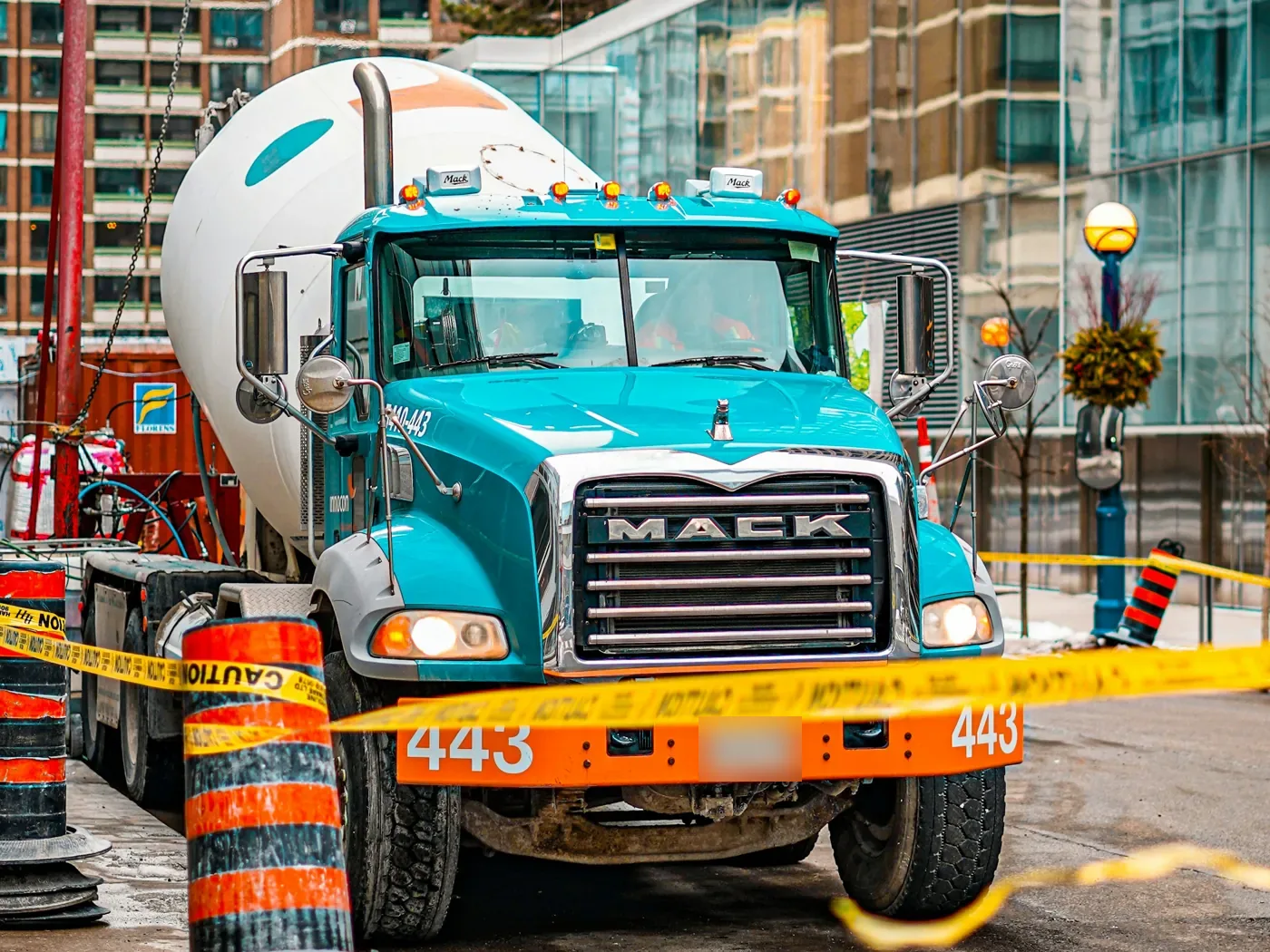
Most work trucks sleep in the same yard they left that morning. The dump truck runs quarry to job site all day. The mixer goes plant to pour and back. The refuse truck runs its route and dumps at the transfer station. That’s exactly the kind of driving the federal short-haul exemption was written for.
The exemption, often called the 150 air-mile rule, lets local drivers skip the logbook and the ELD on days that stay close to home and end on time. It saves paperwork every day. But vocational days don’t always end on time, and the people waiting on the trucks have their own deadlines. Here’s how the rule works, where each trade runs into trouble, and how to keep the records it requires.
What the short-haul exemption covers
For drivers who need a CDL, the rule is in 49 CFR 395.1(e)(1). A driver is exempt from logs and ELDs on any day that meets all of these conditions: (49 CFR 395.1(e))
- The driver stays within a 150 air-mile radius of the normal work reporting location.
- The driver returns to that location and is released from work within 14 consecutive hours.
- The driver had at least 10 consecutive hours off duty before the shift.
- The motor carrier keeps an accurate time record for the day and holds it for six months.
An air mile is a nautical mile, so 150 air miles is 172.6 regular miles. It’s measured in a straight line from the yard, not by road. A job site 190 road miles away by highway can still be inside the radius if the straight-line distance is under 172.6 miles.
Short-haul drivers also don’t need the 30-minute break. The break rule, 49 CFR 395.3(a)(3)(ii), says it doesn’t apply to drivers who qualify for the short-haul exemption. (49 CFR 395.3)
What the exemption doesn’t change matters just as much. The 11-hour driving limit, the 60-hour/7-day or 70-hour/8-day weekly limit, drug and alcohol testing and the CDL rules all still apply. The exemption swaps the log for a time record. It doesn’t give anyone a longer day.
Drivers who don’t need a CDL
Drivers of smaller trucks that don’t require a CDL have their own version in 395.1(e)(2). They also stay within 150 air miles and return to the same location each day. Instead of a hard 14-hour release, they can’t drive after the 14th hour on duty on 5 days of any 7, or after the 16th hour on 2 days of any 7. Their company keeps the same kind of time records. (49 CFR 395.1(e))
One more limit: these are federal rules for interstate carriers. A driver who never leaves one state may fall under state rules, which often follow the federal ones with some differences. Check with your state if your trucks stay home.
Does my day qualify?
Run these four questions at the end of each shift. A CDL driver who can say yes to all four had a short-haul day.
Does my day qualify? CDL drivers
- Did the day start and end at your normal work reporting location?The yard, plant or shop where you report. A different job site each day is fine; the start and end point is what counts.
- Did every stop stay within 150 air miles of that location?That’s 172.6 regular miles in a straight line, not road miles.
- Were you released within 14 hours of coming on duty?The 14 hours run straight through. Lunch, waiting at the plant and breakdowns don’t stop the clock.
- Did you have at least 10 hours off before the shift?Ten hours in a row, off duty.
Yes to all four
It’s a short-haul day. No log, no ELD, no 30-minute break. Your company keeps a time record.
No to any one
Log that day. Take a 30-minute break after 8 hours of driving. Count it toward the 8-days-in-30 ELD limit.
Where each trade runs into the limits
Every vocational trade uses the exemption a little differently, and each has its own way of stretching the day.
Dump trucks
Dump truck days are usually shaped by the supplier. Quarries, sand pits and asphalt plants run set operating hours, so a driver hauling aggregate mostly finishes when the scale house closes. The day that breaks the 14-hour window tends to be the exception: the plant stays open for a night paving job, the line at the scale backs up, or the last load goes to a site an hour farther out than planned.
Dump truck drivers also get a weekly break most other drivers don’t. Under 395.1(m), drivers hauling construction materials or equipment to or from an active construction site within 75 air miles of their normal work reporting location can restart the 60- or 70-hour week with 24 hours off instead of 34. An active site runs from mobilization to final completion. States can set the distance between 50 and 75 air miles for drivers who stay in the state. (49 CFR 395.1(m), 395.2)
Concrete mixers
Ready-mix runs on the pour schedule. Summer pours often start before daylight to beat the heat, and a slab can’t stop halfway because the clock says so. A pump that breaks down, a slow finishing crew or one more truck called at 3 PM can push a mixer driver toward hour 14.
Mixer drivers rarely leave the plant’s area, so most days qualify. On a day that doesn’t, the 30-minute break comes back. There’s help for that too: under 395.1(t), a ready-mix driver can count 30 minutes or more of waiting with the truck at a job site or the plant as the break, as long as no other work is done during it. (49 CFR 395.1(t))
Refuse trucks
Refuse routes start early and run long when a truck breaks down or the landfill line is slow. Who owns the truck matters here. Trucks run by a city, county or state government are exempt from most federal motor carrier safety rules, including hours of service, under 49 CFR 390.3(f)(2). Their drivers still need a CDL and still fall under drug and alcohol testing. (49 CFR 390.3)
That exemption doesn’t follow the work. A private hauler collecting trash under a city contract isn’t a government vehicle. Its drivers follow the hours rules, and the short-haul exemption is how most of them avoid logs.
Heavy equipment haulers
Lowboy and equipment haulers are the most likely to fall outside the rule, because moves go where the job goes. A move past 150 air miles means a log for that day. Many state oversize permits also limit when a load can travel, which can leave a driver waiting on the side of the road with the clock running.
Equipment moves count as construction equipment under 395.1(m), so the 24-hour restart can apply to haulers moving machines to or from active sites within 75 air miles. Haulers who log more than 8 days in any 30 need an ELD, which is why many equipment fleets run ELDs in every truck. (49 CFR 395.8)
When the job pushes the clock
Everyone on a job site has a reason to keep the trucks rolling. A grading contractor wants the pad cut and compacted before the rain. A paving crew needs mix while the weather holds. A concrete contractor can’t walk away from a half-placed slab. And many construction contracts charge the contractor a set amount for every day the project runs late. All of that pressure rolls downhill to the trucks.
It helps to know what the rules do and don’t allow when the call comes for one more load.
A rain forecast doesn’t add hours
The adverse driving conditions exception gives a driver up to 2 extra hours. It only covers snow, ice, sleet, fog or other bad weather, or unusual road or traffic conditions, that the driver didn’t know about and couldn’t reasonably have known about before the day started, or that the carrier didn’t know about at dispatch. A storm that’s in the morning forecast doesn’t qualify. Neither does hurrying to finish a pad before the rain. That’s a job-site reason, not a road condition. (49 CFR 395.1(b), 395.2)
The 16-hour exception, once a week
Under 395.1(o), a driver who has reported to and been released from the same yard for the previous 5 duty tours can stretch the 14-hour window to 16 hours. It can be used once in any 6 consecutive days, or again after a 34-hour restart. It doesn’t add driving time: the 11-hour limit still applies. And because the day runs past 14 hours, it’s not a short-haul day for a CDL driver, so that day needs a log. (49 CFR 395.1(o))
Pressure to break the rules is against the law
Under 49 CFR 390.6, motor carriers, shippers, receivers and transportation intermediaries can’t coerce a driver into breaking the hours rules. Coercion means the driver says the trip would break the rules, and someone threatens to take away loads, cut pay, fire the driver or take some other action against them. A driver can file a written complaint with FMCSA within 90 days. Separate federal law, 49 U.S.C. 31105, protects employees who refuse to drive in violation of safety rules. (49 CFR 390.6; FMCSA)
How good crews handle it
- Set a head-back time. If the drive back to the yard takes an hour, the last load leaves the job by hour 12, not hour 13 and a half.
- Talk about the clock before the job, not at 4 PM. Contractors plan around truck counts. Tell them how many hours your drivers have left.
- Split a long pour or a big haul day between two drivers instead of stretching one.
- Keep a paper log book in every truck for the day that runs over, and know how to fill it out.
- Back up the driver who says no. A driver who refuses an illegal load is doing the job right.
If a day runs over
Going past 14 hours or 150 air miles doesn’t end the exemption for the week. The rule works day by day. That one day needs a log, also called a record of duty status, and the 30-minute break after 8 hours of driving applies that day. The next day that meets the conditions is a short-haul day again.
Watch the count, though. A driver who needs a log on no more than 8 days in any 30-day period can use paper logs. More than that, and the driver needs an ELD. (49 CFR 395.8)
What a short-haul time record shows
The carrier keeps a time record for every short-haul driver and every day, for six months. (49 CFR 395.1(e)) It has to show:
- The time the driver reported for duty.
- The total hours on duty that day.
- The time the driver was released.
- For drivers used for the first time or only now and then, the total time on duty for the past 7 days.
Here’s what that looks like for a dump truck driver in a busy week. Thursday ran long when the asphalt plant stayed open for a night paving job.
| Day | Reported for duty | Released | Hours on duty | Notes |
|---|---|---|---|---|
| Mon | 6:00 AM | 5:30 PM | 11.5 | Short-haul day |
| Tue | 6:00 AM | 4:45 PM | 10.75 | Short-haul day |
| Wed | 5:30 AM | 6:15 PM | 12.75 | Early paving start, still inside 14 hours |
| Thu | 6:00 AM | 9:15 PM | 15.25 | Over 14 hours: log this day (16-hour exception used) |
| Fri | 7:15 AM | 4:30 PM | 9.25 | Started after 10 hours off |
| Total, last 7 days | 59.5 | Under the 60-hour/7-day limit, so Saturday is off | ||
Two things stand out. Thursday needs a log because it ran past 14 hours, even though the driver qualified for the 16-hour exception that day. And the week is at 59.5 hours, so a Saturday shift would break the 60-hour limit unless the company runs every day of the week and uses the 70-hour/8-day schedule, or the driver gets a restart first.
Free toolKeep this record without a clipboard. The free 150 Air-Mile Time Card works on any phone, keeps your times on your device, flags a day that runs past 14 hours, and exports the records your company keeps.Open the time card →Short-haul exemption FAQ
Does the short-haul exemption apply to dump truck drivers?
Yes, on days that qualify. A CDL dump truck driver who stays within 150 air miles of the yard, returns there and is released within 14 hours, and had at least 10 hours off before the shift needs no log or ELD that day. The company keeps a time record instead. Drivers hauling to or from an active construction site within 75 air miles of the yard can also restart the weekly limit with 24 hours off instead of 34.
Do concrete mixer drivers qualify for the short-haul exemption?
Most do, because ready-mix trucks rarely run far from the plant. The same 150 air-mile and 14-hour conditions apply. On days a mixer driver needs the 30-minute break, 30 minutes or more spent waiting with the truck at a job site or the plant counts as the break if the driver does no other work.
Can rain or a weather delay let a driver work past 14 hours?
Not because of a forecast. The adverse driving conditions exception adds up to 2 hours only when bad weather or unusual road or traffic conditions that weren’t known before the day began slow the trip. Racing to finish a job before the rain arrives is a job-site reason, not a road condition.
Can a contractor or supplier pressure a driver to break hours-of-service rules?
No. Federal rule 49 CFR 390.6 bars motor carriers, shippers, receivers and transportation intermediaries from coercing a driver to break the hours rules, for example by threatening lost loads, lost pay or the driver’s job after the driver says the trip would break the rules. A driver can file a written complaint with FMCSA within 90 days.
What is the 16-hour short-haul exception?
A property-carrying driver who returned to and was released at the normal work reporting location for the previous 5 duty tours can stretch the 14-hour window to 16 hours once in any 6 consecutive days, or again after a 34-hour restart. It doesn’t add driving time: the 11-hour limit still applies. Because that day runs past 14 hours, a CDL driver keeps a log for it.
Are city-owned garbage trucks covered by the hours-of-service rules?
Not by the federal ones. Trucks run by a federal, state or local government are exempt from most federal motor carrier safety rules, including hours of service, but their drivers still need a CDL and still fall under drug and alcohol testing. Private haulers that collect trash under a city contract aren’t government vehicles and follow the hours rules. States can set their own rules.
If one day runs over, does a driver lose the short-haul exemption for the week?
No. The exemption works day by day. The day that runs past 14 hours or 150 air miles needs a log, and the next day that meets the conditions is a short-haul day again. A driver who needs a log on more than 8 days in any 30-day period needs an ELD.
The short-haul exemption is one of the best tools a local fleet has. It keeps paperwork light on the days that go right. Knowing where it stops, and saying so before the day runs long, keeps it working for you.
Stay in the loop
Join the Crew free for hours-of-service and road rule updates, new free tools, and stories from vocational fleets across the country.
Sources (8)
- 49 CFR 395.1, Scope of rules: short-haul (e), adverse driving conditions (b), construction restart (m), 16-hour exception (o), ready-mixed concrete (t)
- 49 CFR 395.2, Definitions: adverse driving conditions; transportation of construction materials and equipment
- 49 CFR 395.3, Maximum driving time for property-carrying vehicles
- 49 CFR 395.8, Driver’s record of duty status
- 49 CFR 390.6, Coercion prohibited
- 49 CFR 390.3, General applicability
- FMCSA, FAQs: prohibited coercion of CMV drivers
- Federal Register, Hours of Service of Drivers final rule (June 1, 2020)
Rules were checked against the Code of Federal Regulations on Oct 29, 2026. This is general information, not legal advice. Drivers who stay inside one state may follow state rules that differ. See something out of date? Send a correction