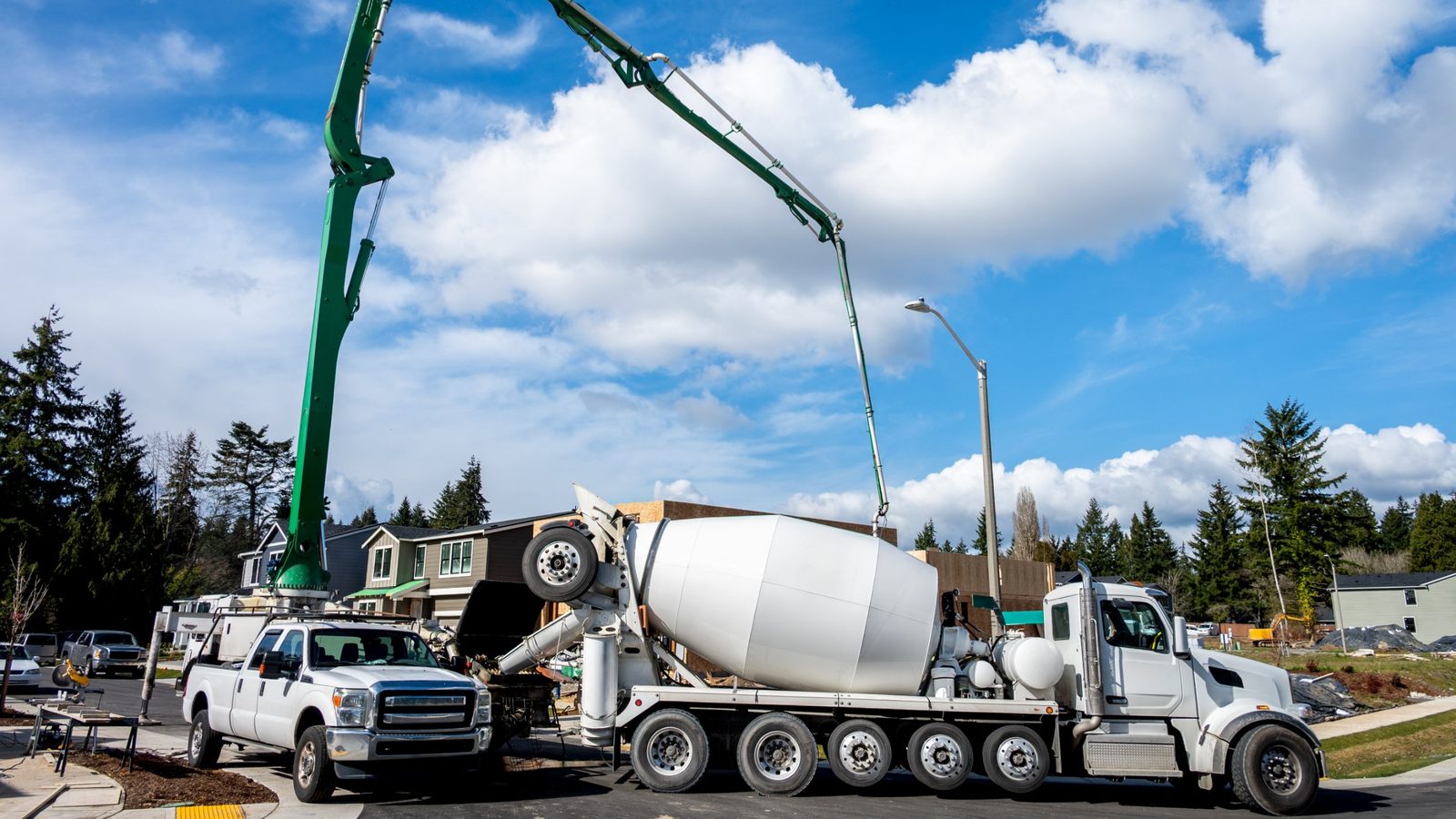
The trucks
The mixer is the icon of this industry, supported by pumpers and bulk haulers that keep plants and pours supplied.
| Truck | What it does | Typical setup |
|---|---|---|
| Rear-discharge mixer | Mixes and delivers ready-mix concrete; the most common mixer | Straight truck with a rotating drum and rear chute, often with lift axles |
| Front-discharge mixer | Lets the driver place concrete from the cab, often without a helper | Drum discharges over the cab; chute steered from inside |
| Concrete pump truck | Pumps concrete to upper floors or across sites a mixer can't reach | Multi-section boom and outriggers on a heavy chassis |
| Dry-bulk pneumatic tanker | Hauls cement powder and fly ash to ready-mix plants | Tractor plus pressurized bulk trailer |
| Aggregate hauler | Brings sand, gravel and stone from quarries to plants | Dump trucks, end dumps and belly dumps (see Guide No. 01) |
The people and the jobs
Mixer drivers are the face of a ready-mix company. Most work early starts on local routes that end at home each night.
Mixer driver pay shown is for heavy truck drivers in construction. First-time Class B applicants must complete entry-level driver training. Pay: BLS, May 2025.
Safety on the job
A loaded mixer carries a high, moving load, so rollovers, boom contact with power lines and silica dust are the main risks.
- Rollovers: slow down on curves and site ramps; the load shifts as the drum turns.
- Pump booms and power lines: OSHA requires at least 10 feet of clearance from energized lines; pump manufacturers and the American Concrete Pumping Association recommend 17 feet.
- Drum and chute: lock out the drum before anyone climbs in to clean it, and keep hands clear of chute hinges.
- Silica dust: OSHA's construction standard, 29 CFR 1926.1153, requires a written exposure control plan, dust controls and training.
- Backing on site: use the same spotter and blind-spot rules as dump trucks.
Fleet buyer spec checklist
Payload per trip is the number that pays for a mixer, so spec the drum and axles to your state's bridge laws first.
Resource kit
Concrete & Aggregate resource kit
Toolbox talks for your next crew meeting, the rules that apply most and the associations that train and represent the trade.
Toolbox talks
Links go to official and association sites. More: DOT Compliance Center · Buyer’s Guide · Parts & Maintenance
Concrete & Aggregate FAQ
How much concrete does a mixer truck carry?
Most rear-discharge mixers carry about 8 to 11 cubic yards, depending on the drum, the number of axles and state weight laws.
Do ready-mix drivers need a CDL?
Yes. Mixer trucks are almost always rated over 26,000 lb GVWR, so drivers need at least a Class B CDL.
Why do concrete mixers roll over?
A mixer carries a heavy, high load that shifts as the drum turns. Slowing down on curves, ramps and uneven job sites is the best prevention.
For truck manufacturers, dealers and upfitters
Reach this industry
Ready-mix producers buy mixers in fleets and value lightweight, driver-friendly trucks that help them hire.
- Sponsor this guide and mixer-driver stories.
- Feature mixer and pump body builders in Spec & Upfit.
- Co-host driver recruiting events with local ready-mix producers.
- Use the Proud Partner badge on mixer spec sheets.