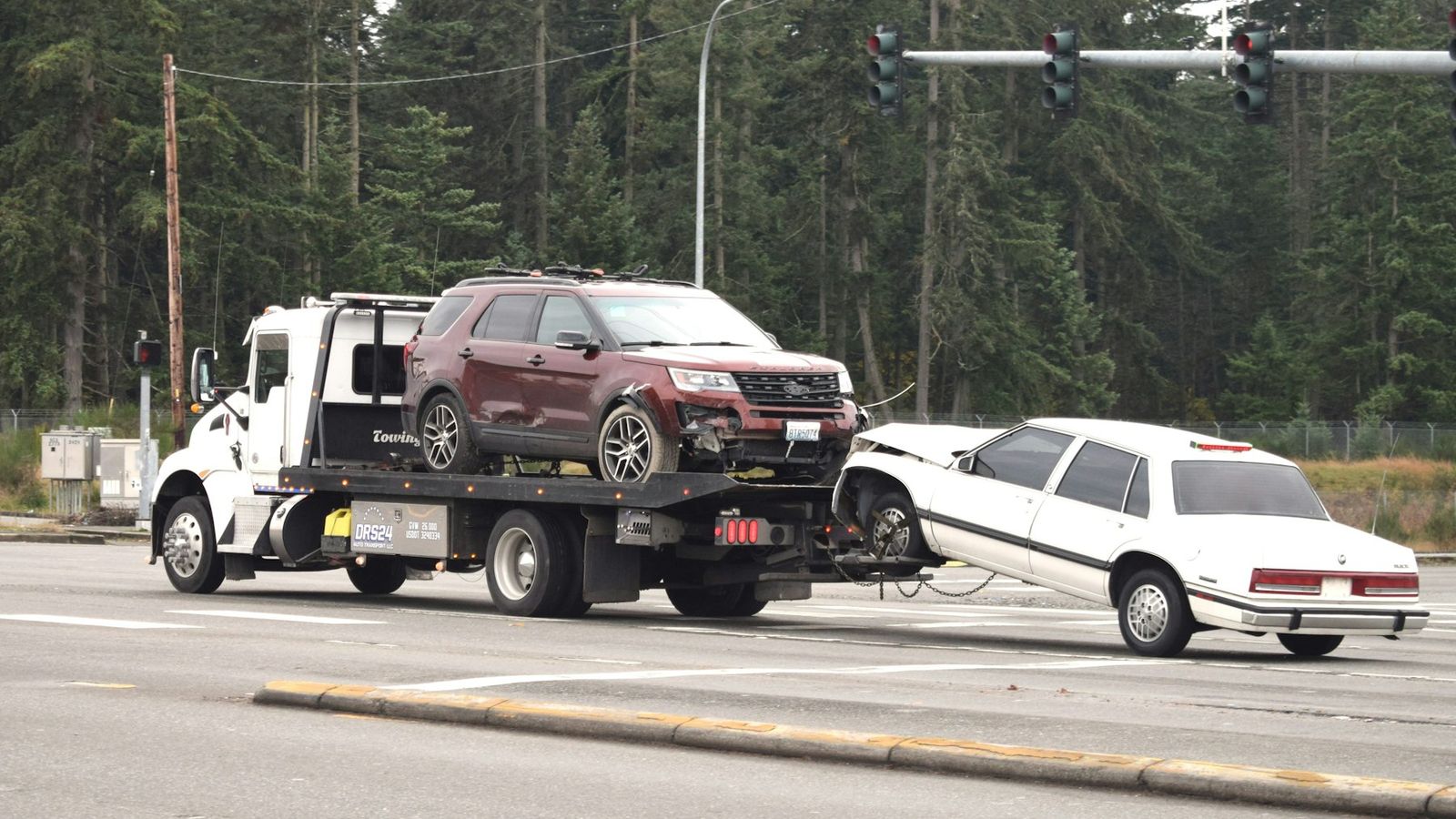
The trucks
Heavy towing uses Class 8 trucks to recover and tow other Class 8 trucks, so the wrecker must outclass the load.
| Truck | What it does | Typical setup |
|---|---|---|
| Heavy wrecker | Tows semis, buses and heavy trucks | Fixed boom, underlift and winches on a tandem or tri-axle chassis |
| Rotator | Lifts overturned trucks and heavy equipment from any angle | Rotating boom with outriggers on a tri-axle or quad-axle chassis |
| Sliding-axle or landoll trailer | Hauls damaged or non-running equipment | Tractor plus a tilting trailer with a winch |
| Medium-duty wrecker | Box trucks, RVs and smaller commercial vehicles | Boom and underlift on a Class 6–7 chassis |
| Support unit | Carries air cushions, lighting, absorbents and scene gear | Service body or trailer |
The people and the jobs
Heavy recovery is a skilled trade. Operators rig loads that weigh as much as their own truck, on live highways and at all hours.
No public source tracks heavy tow operator pay on its own; the figure shown is the median for all heavy truck drivers (BLS, May 2025).
Safety on the job
Passing traffic is the deadliest hazard. About 24 emergency responders, including tow providers, are struck and killed at the roadside each year.
- Move Over laws: every state and D.C. requires drivers to slow down or change lanes for stopped tow trucks with lights on, but many drivers still don't.
- Scene setup: position the wrecker to shield the work area, use cones and flares, and work from the side away from traffic.
- Visibility: high-visibility clothing day and night, plus scene and work lighting.
- Rigging: inspect chains, straps and cables before every job, and stay out of the line of fire.
- Rotator lifts: set outriggers on firm ground, follow load charts and keep one person in charge.
Fleet buyer spec checklist
The chassis has to carry the wrecker body and safely tow the heaviest vehicles you recover.
Resource kit
Towing & Recovery resource kit
Toolbox talks for your next crew meeting, the rules that apply most and the associations that train and represent the trade.
Toolbox talks
Links go to official and association sites. More: DOT Compliance Center · Buyer’s Guide · Parts & Maintenance
Towing & Recovery FAQ
What is a rotator?
A heavy wrecker with a boom that rotates, used to upright and recover large trucks, buses and equipment.
What are Move Over laws?
Laws in all 50 states and D.C. that require drivers to move over or slow down for roadside responders, including tow trucks.
Do tow truck drivers need a CDL?
Heavy wreckers rated over 26,000 lb GVWR need a Class B CDL, and a Class A may be needed when towing heavy vehicles as a combination.
For truck manufacturers, dealers and upfitters
Reach this industry
Towing companies are mostly small, owner-run businesses, about 10,600 of them nationwide (U.S. Census Bureau, 2023). They buy a few high-value trucks at a time and stay loyal to the dealers and body builders who keep them running.
- Sponsor this guide and Move Over awareness campaigns.
- Feature wrecker and rotator body builders in Spec & Upfit.
- Highlight financing and uptime programs for small operators.
- Use the Proud Partner badge at towing shows and on delivered units.