The trucks
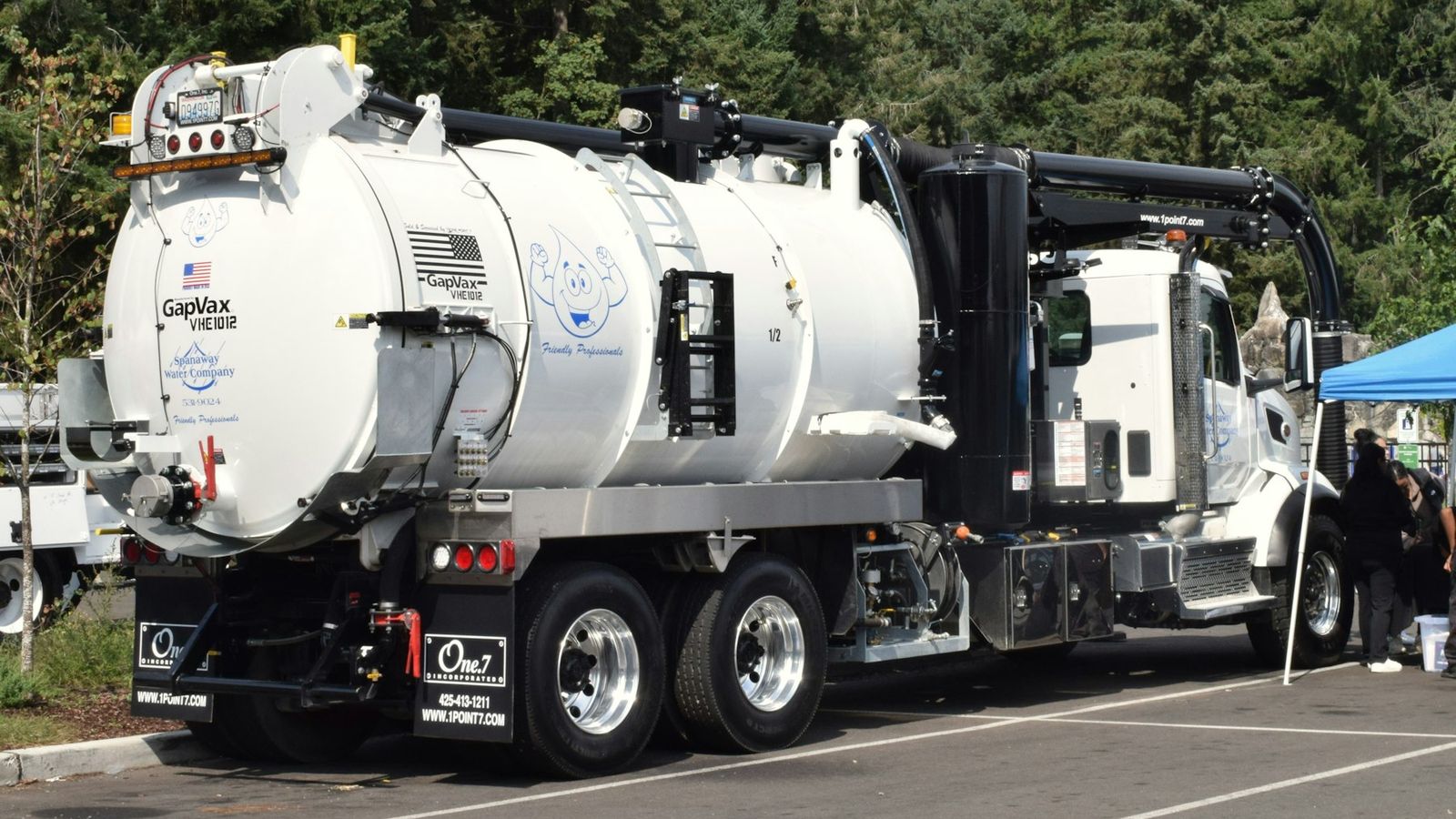
Most trucks in this trade combine a tank, a vacuum pump or blower and a high-pressure water system. The job decides the mix.
| Truck | What it does | Typical setup |
|---|---|---|
| Septic pumper | Pumps residential and commercial septic tanks and grease traps | Steel or aluminum tank with a liquid-ring or vane vacuum pump |
| Combination sewer cleaner | Clears and vacuums sewer lines, catch basins and storm drains | Vacuum debris body, high-pressure jetter and hose reel |
| Hydro-excavator | Digs with pressurized water and vacuum to expose buried utilities safely | Positive-displacement blower, debris body, water heater for frozen ground |
| Industrial vacuum loader | Cleans tanks, pits and spills at plants and refineries | High-power blower for wet and dry material; often hazmat-rated |
| Jetter truck | Cleans drain and sewer lines with high-pressure water | Water tank, pump and hose reel, often on a medium-duty chassis |
| Portable restroom service truck | Services portable toilets at job sites and events | Smaller split tank for fresh water and waste |
The people and the jobs
Vacuum work is local and year-round: tanks fill, sewers clog and utilities still need exposing in every economy. Crews often run one or two people per truck.
Septic and sewer pay is BLS data for May 2025; driver and technician pay is the U.S. median for all industries, May 2025 (BLS).
Safety on the job
The hazards are as much in the hole as on the road: toxic gas, confined spaces, high-pressure water, static sparks and liquid loads that surge.
- Toxic gas: hydrogen sulfide and methane build up in sewers and septic tanks. Test the air and never enter a tank or manhole without a confined-space program.
- Static and fire: ground and bond the truck and use conductive hoses when vacuuming flammable liquids.
- High-pressure water: jetter and hydro-excavation wands can cut skin. Use trained operators, guards and protective gear.
- Buried utilities: call 811 before digging, and use water and vacuum near marked gas, power and fiber lines.
- Liquid surge: partly full tanks push the truck in turns and stops. Slow down early and know your axle weights.
Material containment
Nothing leaks, nothing spills
Septage, sludge and slurry leaking from a valve or spilled at a dump site can bring federal violations, state environmental fines and lost hauling permits. Under 49 CFR 393.100(b), cargo must not leak, spill, blow or fall from the truck.
- Cap and seal: close and cap every valve and inspect gaskets and hatch seals before driving.
- Don't overfill: watch the sight glass or gauge, and leave room for surge.
- Clean the hoses: drain and stow hoses so nothing drips on the road.
- Carry a spill kit: absorbent, plugs and a shovel on every truck, with a plan to report spills.
- Dispose legally: unload only at permitted treatment plants and disposal sites, and keep the manifests.
| Consequence | Amount or effect |
|---|---|
| Federal penalty, carrier | Up to $19,246 per violation (49 CFR 386, App. B; adjusted for inflation each year) |
| Federal penalty, driver | Up to $4,812 per violation |
| State fines | $10 to $5,000 depending on the state; at least 16 states also allow jail time |
| CSA score | 49 CFR 393.100(b) (leaking, spilling, blowing or falling cargo) carries severity weight 7, in the Vehicle Maintenance BASIC and on the driver's record |
| Time in the score | 24 months: 3x for the first 6 months, 2x to 12 months, then 1x; +2 if placed out of service. One recent spill = 21 points, as much as seven minor securement violations |
FMCSA is revising CSA scoring, including a simpler 1–2 severity scale; check the current method. General information, not legal advice. Sources: 49 CFR 393.100, 49 CFR 386 App. B, J. J. Keller, AAA state survey, AAA. DOT Compliance Center →
Fleet buyer spec checklist
Spec around the material, whether sludge, water, soil, grease or industrial waste, and how far it travels to disposal.
Resource kit
Environmental & Vacuum resource kit
Toolbox talks for your next crew meeting, the rules that apply most and the associations that train and represent the trade.
Toolbox talks
Links go to official and association sites. More: DOT Compliance Center · Buyer’s Guide · Parts & Maintenance
Environmental & Vacuum FAQ
What is hydro-excavation?
Digging with pressurized water and a powerful vacuum to expose buried gas, power and fiber lines without striking them.
How often should a septic tank be pumped?
The EPA says household septic tanks are typically pumped every 3 to 5 years and inspected at least every 3 years.
Do vacuum truck drivers need a tank endorsement?
Usually. The tank (N) endorsement is required when a CDL truck carries liquid in a tank of 1,000 gallons or more, or in tanks of more than 119 gallons each that add up to 1,000 gallons or more.
For truck manufacturers, dealers and upfitters
Reach this industry
Fact.MR estimates the U.S. hydro vacuum excavation services market at about $797.7 million in 2024, growing about 3.9% a year through 2034, driven by safer digging and infrastructure work.
- Sponsor this guide and confined-space safety stories.
- Feature vacuum, jetter and hydro-excavation body builders in Spec & Upfit.
- Support Call 811 safe-digging awareness.
- Use the Proud Partner badge at environmental and wastewater trade shows.